


Arakan Rohingya Salvation Army (ARSA)
- Patrick Pearson

- Jan 7
- 9 min read
Insurgency Overview

The Arakan Rohingya Salvation Army (ARSA) is one of the many ethnic armed organisations (EAOs) engaged in the ongoing Myanmar civil war. Primarily active in western Myanmar’s Rakhine State, the group was formed in 2013 by its leader, Ataullah abu Ammar Jununi, in reaction to the widespread persecution of the Rohingya people (1). The ARSA is aligned with the Tatmadaw, Myanmar’s ruling military junta, along with the Four Brothers Alliance, made up of the ARSA and other Rohingya EAOs (2). The group aims to achieve self-determination for the Rohingya people through separatism, and despite declaring itself as secular, it has been accused of Islamist and Jihadist practices (3). Currently, its leadership is based out of Bangladesh and Saudi Arabia (4). While many of the EAOs involved in the civil war are well armed and have a formal paramilitary structure, the ARSA is distinct in that it is a poorly equipped informal militia. Due to its limited capacity for conventional tactics commonly used by other EAOs, its attacks are characterised by guerrilla warfare. The ARSA has been accused of various atrocities and war crimes, as well as enforcing traditional Islamic practices through force (3).
History & Foundations
The Rohingya people, who hail from Rakhine State and practice Islam, are one of the world’s largest stateless people and face extreme persecution in Myanmar. Since the independence of Myanmar, then known as Burma, from the British Empire in 1948, the Rohingya have been deprived of their rights and subjected to numerous atrocities. In 1978, the ruling military junta confiscated the identification cards of hundreds of thousands of Rohingya and expelled them to Bangladesh. They were eventually allowed to return, but were subsequently considered Bangladeshi. The Rohingya became stateless in 1982 after a citizenship law was passed that recognised Myanmar’s many ethnic minorities. However, the Rohingya were left off this list. This paved the way for further persecution, with many cases of ethnic cleansing, pogroms, religious persecution, sexual violence, forced labour, and forced displacement in the following decades. This precipitated a refugee crisis in which most of the Rohingya population has been displaced (1).
There are long-lasting ethnic tensions in Rakhine State between the Rohingya, the majority in the north of the region, and the Buddhist Rakhine people. They came to a head in 2012 during a series of riots in response to the rape and murder of a Rakhine woman, allegedly perpetrated by Rohingya youth. Over the course of the riots, roughly 200 people were killed, and over 100,000 Rohingya were forcefully displaced (5). In reaction to the riots, Ataullah abu Ammar Jununi, a Pakistan-born Rohingya imam, drew on the heightened tensions caused by the riots to begin recruiting for an armed group known as Harakah al-Yaqin. This group later became the ARSA (3).
Jununi spent the next three years recruiting and training members ahead of the launch of its armed campaign in 2016. The first major action of its campaign were raids on three police posts in October of that year. The ARSA looted weapons and equipment and killed nine police officers in the process. In response, the Tatmadaw furthered its persecution of the Rohingya, regardless of their affiliation with the ARSA, forcing another 90,000 Rohingya into displacement. Officials labelled the ARSA as terrorists and claimed that it was affiliated with Al Qaeda and the Islamic State, an allegation that the ARSA denies (1).
These attacks coincided with the formation of the Advisory Commission on Rakhine State, an international commission led by former UN Secretary General Kofi Annan. The commission was established to produce a report analysing the human rights of both the Rohingya and Buddhist Rakhine in the region. All parties involved expected that the release of the report would heavily condemn the conditions of the Rohingya and put international pressure on the Tatmadaw and government to curtail human rights abuses. This was understood by the Rakhine people to constitute interference in their local affairs (3).
Harakah al-Yaqin was renamed to the Arakan Rohingya Salvation Army in March 2017. More violence came that year when, expecting incoming international attention from the report, the ARSA preemptively attacked military and police facilities. The ARSA believed that the Tatmadaw cracked down on the Rohingya once again ahead of the report, so the organisation thought to get ahead of the military by launching its own offensive. The ARSA attacked over 20 police posts and an army base in the Maungdaw area in the western corner of Rakhine State on August 25. During the operation, 12 members of the police and Tatmadaw were killed, while the ARSA lost 77 insurgents (6). Simultaneously, the ARSA carried out the Kha Maung Seik massacre, in which Hindus in nearby villages were taken hostage and killed. There were 99 victims. The Tatmadaw responded with an operation attempting to root out the ARSA in the region, in the process assaulting many civilians not affiliated with the group. This prompted 700,000 Rohingya to flee the country (7).
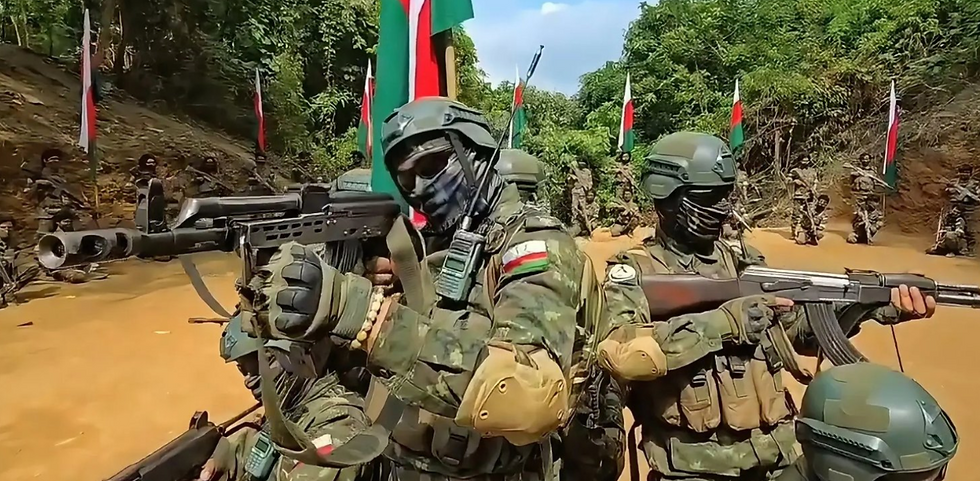
After two years of sporadic attacks, the ARSA regrouped in 2020 in Maungdaw. The timing was advantageous for the ARSA, as in February 2021, the Tatmadaw would launch a coup d'état against the democratically elected civilian government led by Aung San Suu Kyi. The country soon after erupted into a civil war between the military, the government-in-exile, known as the National Unity Government (NUG), and its paramilitary branch, the People’s Defence Force (PDF), with allied EAOs on both sides. The ARSA found itself stuck in the middle, primarily fighting against the Tatmadaw and the NUG-aligned Arakan Army. In November of that year, renewed clashes between the ARSA and Tatmadaw broke out in Maungdaw (8).
Meanwhile, Rohingya human rights activist Mohib Ullah was assassinated by the ARSA in the Kutupalong refugee camp. The camp, located in Cox’s Bazar, Bangladesh, is the largest refugee camp in the world, and most of its population of nearly 700,000 are Rohingya. The ARSA has a presence in Kutupalong and other camps like it in the region. Ullah led the Arakan Rohingya Society for Peace and Human Rights, which the ARSA saw as a threat to its power and thus had him killed, as alleged by Bangladeshi law enforcement (5).
In 2022, Bangladeshi police cracked down on the ARSA, arresting over 800 individuals connected to the group. Three of those individuals were high-ranking members arrested in a refugee camp in Cox’s Bazar. These were Abu Bakkar, an ARSA camp leader, Syedul Amin, a gun runner, and Nur Mohammad, a chairman of the group’s fatwa committee (9).
In early 2023, the ARSA clashed with the Rohingya Solidarity Organisation (RSO), a rival group, in the Konarpara Refugee Camp near Myanmar’s border with Bangladesh. The RSO attacked an ARSA meeting, and a gunfight broke out, killing one RSO man (10).
The ARSA allegedly killed Kutupalong refugee camp warden Mohammad Ebadullah on July 6, 2023, as he was collecting witnesses to testify to an International Criminal Court prosecutor. More clashes between the ARSA and RSO immediately followed, with six combatants killed the following day (11).
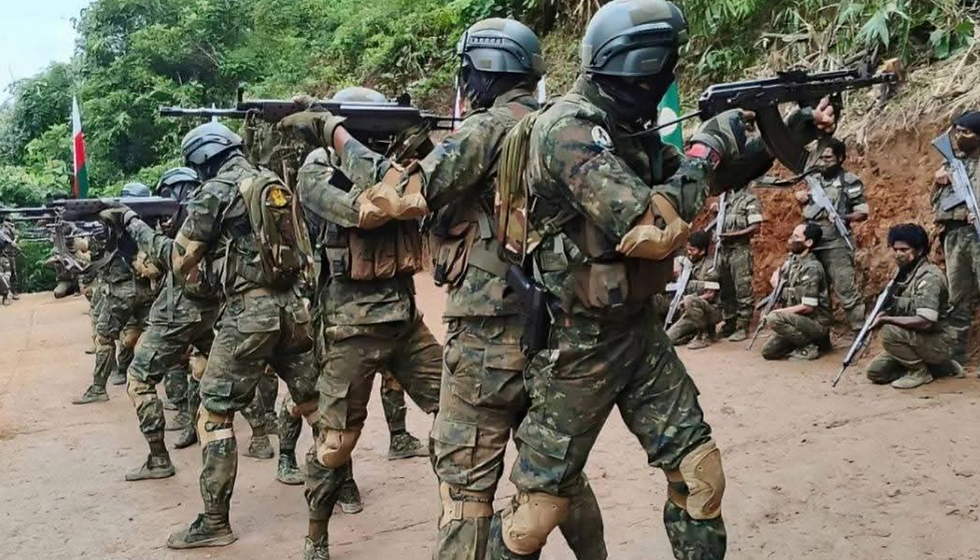
The ARSA failed to advance into AA territory in the Mayu mountains of northern Rakhine state later that month. In return, the AA seized an ARSA outpost (12). As tensions between the ARSA and the AA rose, the ARSA began to collaborate with the Tatmadaw. The ARSA has been reported to force young men to join the Tatmadaw (2).
In March 2025, Bangladeshi counterterrorism officers arrested leader Ataullah abu Ammar Jununi along with nine others affiliated with the ARSA near the capital Dhaka, seizing a significant amount of money in the process. Jununi was charged with murder, illegal entry, sabotage, and militant activities (13). Maulana Borhan, the ARSA’s chief spokesperson, took charge following Jununi’s arrest (5).
Objectives & Ideology
According to the ARSA, the organisation’s primary goal is to defend the persecuted Rohingya and restore their basic rights that have been taken away by Myanmar’s government. While the ARSA claims to be secular and not affiliated with foreign Islamist groups and finance networks, this claim has been disputed by law enforcement officials in Myanmar and Bangladesh (3). Furthermore, it has been known to enforce traditional Islamic values and practices through force, going as far as to forcefully convert Hindu captives in at least one instance (7). However, there is little evidence to suggest international funding, especially given the group’s limited access to sophisticated weapons and equipment. Framing the Rohingya as Islamist terrorists is also a tactic that has long been used by Myanmar government officials to spread fear of the Rohingya and delegitimise their political goals (1, 4).
Political & Military Capabilities
The ARSA does not control significant amounts of territory and instead acts from clandestine camps in rural areas. Therefore, it does not have a role in any political administration, unlike other EAOs. It is particularly present in the Maungdaw region of western Rakhine State, as well as in refugee camps in Bangladesh with a significant Rohingya population, such as Kutupalong and Konarpara. In these camps they do hold some power as one faction vying for power in a chaotic environment. These camps also serve as recruiting grounds for the ARSA.

ARSA members are very poorly armed. While the organisation has access to some firearms, some of which have been captured from the Tatmadaw and other targets, fighters have been known to often use melee weapons such as swords and machetes. As of March 2024, the ARSA is estimated to have 5,000 fighters in its ranks (5).
Approach to Resistance
Because the ARSA does not have the means to hold territory and fight a conventional war in comparison to its state and non-state opponents, it opts instead for guerilla tactics that allow its fighters to attack their targets and quickly retreat before its opponents have a chance to mount a counter-attack. This is seen in the cross-border attacks the ARSA employs, where its fighters will attack a target in Rakhine State before crossing back to Bangladesh, where they are sheltered by sympathetic locals. The ARSA is also known to force civilians to participate in their attacks in order to bolster their numbers (3).
While many of Myanmar’s ethnic nationalist movements have gained legitimate political representation despite their militancy and even degrees of sovereignty, such as in Wa State, the Rohingya have been deprived of any role in the country’s government. This has been one driving factor in the rise in militancy within the larger Rohingya political movement. The ARSA is alleged to have committed a number of atrocities and human rights abuses, including the Kha Maung Seik massacre and forced conversions. According to the United Nations, the ARSA has recruited 150 child soldiers in conjunction with the Tatmadaw (14).
Relations & Alliances
In early 2025, the Four Brothers Alliance was formed. Comprising the ARSA, the RSO, the Arakan Rohingya Army, and the Rohingya Islami Mahaz, the Alliance is a coalition of former rival organisations that have united to achieve their common goals of Rohingya self-determination and countering the Arakan Army. The Alliance is alleged to have ties with the Tatmadaw and to enforce conscription in Rohingya-populated refugee camps (2).
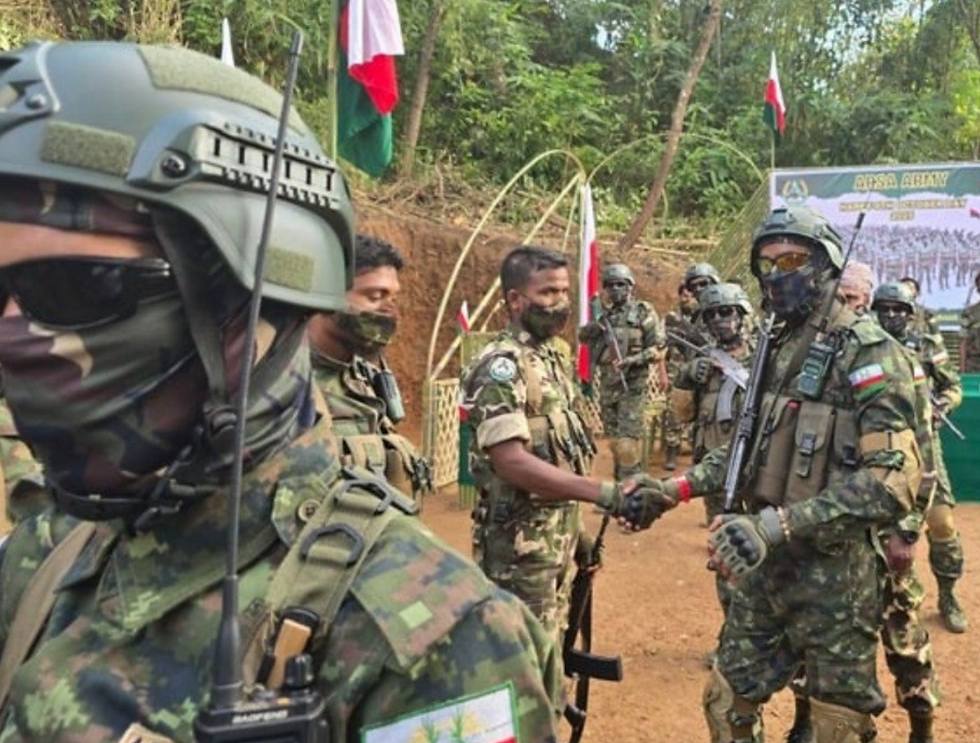
The ARSA has had a very contradictory relationship with the Tatmadaw. While the two were extremely hostile until 2023, and the ARSA initially aligned itself with the exiled National Unity Government following the outbreak of the civil war, the ARSA formed an alliance with the Tatmadaw following increased clashes between the ARSA and the AA (8). The AA is one of the largest and most powerful factions fighting against the Tatmadaw in the civil war and poses a major threat to both the ARSA and the Tatmadaw. Despite their past hostility to one another and the Tatmadaw’s major role in the persecution of Rohingya, this is a strategic alliance, as the AA has come to control much of Rakhine State, including the western region where the ARSA’s actions are concentrated (8). The AA has also targeted the Rohingya under the guise of affiliation with the ARSA and other Rohingya militant groups. This has led to the death and displacement of thousands of Rohingya, further exacerbating the crisis (15).
With its presence in refugee camps within Bangladesh and attacks across the Bangladesh-Myanmar border, the ARSA is a major problem for Bangladeshi security forces. Bangladesh hosts over a million Rohingya refugees and is bearing the brunt of the humanitarian crisis. While Bangladeshi security forces have not engaged in combat with the ARSA, they have instituted several crackdowns on the ARSA and arrested many leading members (9).
Bibliography
(1) Lee, R. (2021). Myanmar’s Arakan Rohingya Salvation Army (ARSA): An Analysis of a New Muslim Militant Group and its Strategic Communications. Perspectives on Terrorism, 15(6), 61-75. https://pt.icct.nl/sites/default/files/2023-04/Article%204_12.pdf
(2) Rahman, S. (2025, February 16). Dil Mohammed: The smuggler shaping a war in Arakan. Dhaka Tribune. https://www.dhakatribune.com/world/south-asia/373800/dil-mohammed-the-smuggler-shaping-a-war-in-arakan
(3) Lintner, B. (2017, September 20). The truth behind Myanmar’s Rohingya insurgency. Asia Times. https://asiatimes.com/2017/09/truth-behind-myanmars-rohingya-insurgency/
(4) Tarabay, J. (2017, December 6). Who are Myanmar’s militants? Five questions about ARSA. CNN. https://www.cnn.com/2017/09/12/asia/arsa-rohingya-militants-who-are-they/index.html
(5) Bhattacharya, B. (2025, April 4). Bangladesh: ARSA And Change Of Reign. Eurasia Review. https://www.eurasiareview.com/04042025-bangladesh-arsa-and-change-of-reign-analysis/
(6) Geneva Academy. (2017, December). Myanmar: A Battle For Recognition. https://www.geneva-academy.ch/joomlatools-files/docman-files/Myanmar%20A%20Battle%20for%20Recognition.pdf
(7) Amnesty International. (2018, May 22). Myanmar: New evidence reveals Rohingya armed group massacred scores in Rakhine State. https://www.amnesty.org/en/latest/news/2018/05/myanmar-new-evidence-reveals-rohingya-armed-group-massacred-scores-in-rakhine-state/
(8) Lipes, J. (2022, January 18). An outlawed group resurfaces, raising new fears of clashes in Myanmar’s Rakhine state. Radio Free Asia. https://www.rfa.org/english/news/myanmar/arsa-01182022191002.html
(9) Barua, S. (2022, July 19). Bangladesh police arrest ‘most wanted’ ARSA member at Rohingya camp. Radio Free Asia. https://www.rfa.org/english/news/myanmar/bangladesh-arsa-07192022064545.html
(10) Rahman, A. (2023, January 18). Rohingya settlement on Bangladesh-Myanmar border torched amid fighting. Radio Free Asia. https://www.rfa.org/english/news/myanmar/rohingaycampfighting-01182023153549.html
(11) Rahman, S. (2023, July 8). Seven Rohingya Refugees Killed in Violence in Bangladesh. Voice of America. https://www.voanews.com/a/seven-rohingya-refugees-killed-in-violence-in-bangladesh-/7172474.html
(12) The Irrawaddy. (2023, July 22). Rakhine State Clash Reported Between AA and Rohingya Militants. https://www.irrawaddy.com/news/burma/rakhine-state-clash-reported-between-aa-and-rohingya-militants.html
(13) MacSwan, A. (2025, March 19). Bangladesh arrests leader of Rohingya insurgent group on criminal charges. Reuters. https://www.reuters.com/world/asia-pacific/bangladesh-arrests-leader-rohingya-insurgent-group-criminal-charges-2025-03-19/
(14) United Nations General Assembly Security Council. (2025, June 17). Children and armed conflict. https://docs.un.org/en/S/2025/247
(15) International Crisis Group. (2024, August 27). Breaking Away: The Battle for Myanmar’s Rakhine State. https://www.crisisgroup.org/asia/south-east-asia/myanmar/339-breaking-away-battle-myanmars-rakhine-state


Comments